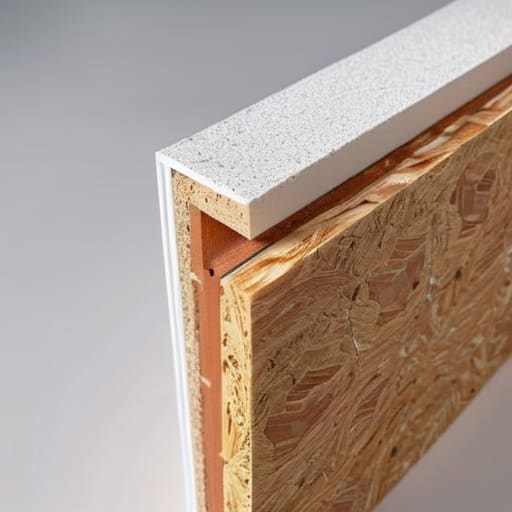
I remember sitting in my workshop last winter, the scent of cedar shavings in the air and a soft ambient track playing in the background, when I realized something unsettling. I was looking at the blueprints for a small studio I was helping a client design, and the technical jargon regarding Structural Insulated Panel (SIP) R-Value was being used more like a marketing weapon than a practical tool. Contractors were throwing around massive numbers to justify sky-high quotes, treating thermal efficiency like a luxury upgrade rather than the fundamental foundation of a peaceful home. It felt less like building a sanctuary and more like being sold a complicated puzzle that no one actually knows how to solve.
I’m not here to drown you in confusing spreadsheets or sell you on the hype of “perfect” insulation. Instead, I want to help you look past the sales pitch and understand what these numbers actually mean for your daily comfort. We are going to strip away the industry fluff and look at how the Structural Insulated Panel (SIP) R-Value serves as the quiet boundary between the chaotic outside world and your inner peace. My promise to you is a clear, logical breakdown that focuses on how this thermal data translates into a home that stays steady, calm, and truly yours.
Table of Contents
- Achieving Inner Calm Through Energy Efficiency of Sip Construction
- Sips vs Traditional Framing R Value Choosing Your Foundation of Peace
- Five Ways to Let Your Home’s R-Value Protect Your Mental Sanctuary
- Building Your Foundation of Quiet: Key Takeaways
- The Silent Guardian of Your Sanctuary
- Building Your Foundation of Peace
- Frequently Asked Questions
Achieving Inner Calm Through Energy Efficiency of Sip Construction
When we talk about the energy efficiency of SIP construction, I often find that people focus solely on the monthly utility bill. But as someone who looks at the psychology of a space, I see something deeper. A home that struggles to maintain its temperature is a home that is constantly “fighting” itself. When your walls are working overtime to combat drafts, that subtle, underlying tension translates into a restless mind. By prioritizing reducing thermal transmittance in SIPs, you aren’t just saving money; you are eliminating the invisible stressors—the sudden chill in a room or the hum of a furnace struggling to keep up—that prevent your home from feeling truly settled.
Think of your home’s thermal envelope as the sturdy, well-crafted joinery on a piece of furniture; it should feel seamless and intentional. When you look at SIPs vs traditional framing R-value, the difference becomes clear: traditional studs create thermal bridges, little cracks in your sanctuary where peace can leak out. SIPs provide a more consistent, unbroken shield. This level of stability allows your environment to remain a constant, predictable backdrop, giving your nervous system the permission it needs to finally unwind and let go.
Sips vs Traditional Framing R Value Choosing Your Foundation of Peace
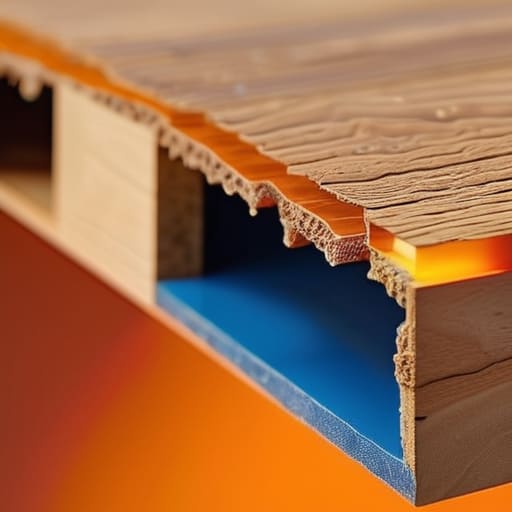
When I’m in my workshop, sanding down a piece of walnut, I think about the importance of a solid foundation. You can’t build a beautiful, lasting piece of furniture on a warped frame, and the same logic applies to your home. In the world of construction, the debate of SIPs vs traditional framing R-value is essentially a choice between a fragmented defense and a unified one. Traditional stick-framing, while familiar, creates a “thermal sieve.” Because of the gaps and the studs themselves, you end up with thermal bridging—tiny leaks where your peace and your heat escape through the cracks.
Choosing SIPs is like moving from a cluttered, disorganized desk to a streamlined, intentional workspace. Because the panels provide continuous insulation benefits, they eliminate those pesky thermal bridges that traditional studs create. When you look at the math—the actual SIPs thermal resistance calculation—you see that it’s not just about having more insulation; it’s about the integrity of the envelope. By minimizing the points where temperature can bleed in or out, you aren’t just saving money on utilities; you are building a quiet, stable boundary that allows your mind to finally settle.
Five Ways to Let Your Home’s R-Value Protect Your Mental Sanctuary
- Interview your insulation: Just as I ask you to question the purpose of an old heirloom, look closely at your SIP R-value. Ensure it’s high enough to act as a sturdy, silent barrier that keeps the seasonal chaos of the outside world from ever reaching your inner peace.
- Seek the seamless flow: One of the most beautiful things about SIPs is the lack of thermal bridges. Think of it like a well-organized bookshelf—when there are no gaps or “clutter” in your insulation, the energy flows smoothly, preventing the mental friction caused by sudden temperature swings.
- Design for long-term stillness: When choosing your panels, don’t just look at the immediate cost. Invest in a higher R-value that serves your future self, much like building a piece of heirloom furniture; you want a foundation that provides consistent, quiet comfort for decades to come.
- Respect the thermal envelope: In my work, I see how “leaks” in a person’s schedule lead to burnout. The same applies to your home. A high R-value in your SIPs creates a tight, intentional boundary, ensuring your sanctuary doesn’t “leak” the warmth and peace you’ve worked so hard to cultivate.
- Listen to the silence: High R-value SIPs do more than manage heat; they dampen the noise of the world. Treat your home’s thermal rating as a tool for auditory decluttering, allowing you to finally hear your own thoughts amidst the stillness of a perfectly regulated space.
Building Your Foundation of Quiet: Key Takeaways
Think of R-value not just as a technical number, but as the thickness of the protective layer between your sanctuary and the unpredictable elements outside.
Choosing SIPs over traditional framing is an investment in long-term mental clarity; by stabilizing your home’s temperature, you remove a hidden source of environmental stress.
True organization extends to the very bones of your house—when your home’s thermal envelope is efficient and intentional, you create a reliable space where your mind can finally rest.
The Silent Guardian of Your Sanctuary
“Think of a high R-value not just as a technical measurement of thermal resistance, but as the quiet, invisible boundary that protects your inner peace; it is the structural way of telling the chaotic outside world to stay exactly where it belongs—outside.”
Nathan Reed
Building Your Foundation of Peace
When you’re deep in the process of redesigning your environment, it’s easy to feel a sense of isolation as you navigate these big, technical decisions alone. I often tell my clients that creating a sanctuary isn’t just about the physical materials; it’s about the emotional support you allow yourself during the transition. If you find yourself needing a space to vent or simply want to connect with others while you work through the stresses of home renovation, finding a little community—perhaps even through an adult chatroom—can provide that much-needed human connection to keep your spirits high. Remember, a peaceful home is built on a foundation of both structural integrity and a healthy, supported mind.
As we’ve explored, selecting the right SIP R-value isn’t just a technical decision about thermal resistance or construction efficiency; it is a decision about the emotional climate of your home. By understanding how these panels outperform traditional framing, you aren’t just insulating walls—you are insulating your life from the unpredictable fluctuations of the outside world. Whether you are choosing a higher R-value to combat biting winter winds or simply seeking a more stable, quiet environment, you are prioritizing a consistent sense of comfort that allows your nervous system to finally settle.
At the end of the day, I want you to remember that your home should be more than just a structure of wood and foam; it should be a vessel for your well-being. Just as I carefully prune a bonsai to reveal its true form, or select the perfect grain of wood for a new table, choosing the right insulation is about intentionality. When you invest in the thermal integrity of your space, you are making a profound statement to yourself: that your peace is worth protecting. Build your sanctuary with purpose, and let the quiet stability of your home become the steady anchor your mind deserves.
Frequently Asked Questions
How do I accurately calculate the total R-value of my SIP walls to ensure my home truly becomes the thermal sanctuary I'm aiming for?
To find your true thermal baseline, you can’t just look at one number; you have to look at the whole assembly. Think of it like a well-crafted joint in carpentry—every piece matters. You’ll need to add the R-values of the SIP core, the exterior sheathing, and the interior finish. Most importantly, don’t forget the thermal bridges at the connections. Calculating the “effective R-value” ensures no energy leaks disrupt the quiet sanctuary you’re building.
If I'm retrofitting an older home, can SIPs bridge the gap between my current energy struggles and a more peaceful, efficient living space?
Think of retrofitting SIPs as the ultimate act of restorative decluttering for your home’s envelope. Just as we remove the mental noise from a cluttered room, SIPs strip away the thermal “noise”—those drafts and energy leaks—that disrupt your comfort. By bridging that gap, you aren’t just upgrading insulation; you’re replacing a chaotic, unpredictable environment with a stable, quiet foundation. It’s a profound way to turn a struggling house into a true sanctuary.
Beyond just temperature, how does the continuous insulation of SIPs help reduce the "sensory noise" of outside sounds in my home?
Think of sound as a form of visual clutter for your ears. Just as a cluttered countertop distracts your eyes, the constant hum of traffic or the neighbor’s lawnmower creates “sensory noise” that keeps your nervous system on high alert. Because SIPs provide a continuous, airtight thermal envelope without the gaps found in traditional studs, they act as a quiet buffer. They don’t just hold heat; they hold the silence, allowing your home to truly feel like a sanctuary.