
As I sit in my garden, surrounded by the soothing scent of herbs and the gentle hum of bees, I’m reminded that how to practice grounding techniques is not about adding another task to our never-ending to-do lists. It’s about embracing the beauty of simplicity and allowing ourselves to be present in the moment. I’ve found that it’s in these quiet, everyday rituals – like sipping a warm cup of tea or tending to my plants – that I’m able to cultivate a sense of calm and clarity.
In this article, I’ll share with you my personal approach to grounding techniques, one that focuses on embracing the ordinary and finding peace in the midst of chaos. You’ll learn how to incorporate simple, tangible practices into your daily routine, from mindfulness exercises to sensory explorations, all designed to help you slow down and appreciate the beauty of the present moment. My goal is to empower you with the knowledge and inspiration to create your own unique grounding practices, ones that will bring you greater calm and deeper connection to yourself and the world around you.
Table of Contents
Guide Overview: What You'll Need

Total Time: 30 minutes to 1 hour
Estimated Cost: $0 – $10
Difficulty Level: Easy
Tools Required
- Comfortable seating optional, a cushion or pillow
Supplies & Materials
- Guided meditation audio free online resources available
Step-by-Step Instructions
- 1. First, let’s start by finding a quiet and comfortable spot to practice our grounding techniques – for me, it’s often in my garden, surrounded by the scent of blooming flowers and the sound of birds singing. Take a few deep breaths, feeling the air move in and out of your body, and allow yourself to settle into the present moment.
- 2. Next, take a moment to notice the sensation of your feet on the ground. Feel the weight of your body distributed evenly, the pressure of your feet on the earth, and the sensation of the air on your skin. This simple act of awareness can help calm the mind and bring you back to the present.
- 3. Now, let’s engage our senses by focusing on the sounds around us. Listen to the birds chirping, the wind rustling through the trees, or the sound of waves crashing in the distance. Allow these sounds to wash over you, and notice how they make you feel. Do you feel more calm, more centered, or more connected to nature?
- 4. The next step is to get your hands dirty – literally. Find a small plant or a patch of soil, and gently run your fingers over the texture. Feel the coolness of the soil, the roughness of the leaves, or the smoothness of the stem. This tactile experience can help ground you in the present moment and calm your mind.
- 5. As we continue to practice our grounding techniques, let’s take a moment to focus on our breath. Feel the sensation of the air moving in and out of your body, the rise and fall of your chest, and the sensation of your belly expanding and contracting. Allow your breath to become your anchor, keeping you grounded and present.
- 6. Now, let’s use our sense of smell to further ground ourselves. Find a nearby herb or flower, and gently bring it to your nose. Inhale deeply, noticing the aroma and scent of the plant. Allow the fragrance to transport you to a place of calm and serenity, and notice how your body responds to the sensation.
- 7. As we near the end of our grounding practice, take a moment to notice the sensation of the sun or moon on your skin. Feel the warmth or coolness of the light, and allow it to soothe your body and calm your mind. Remember, the goal of grounding techniques is not to achieve a specific state, but to simply be present in the moment, without judgment or expectation.
Finding Peace Through Grounding
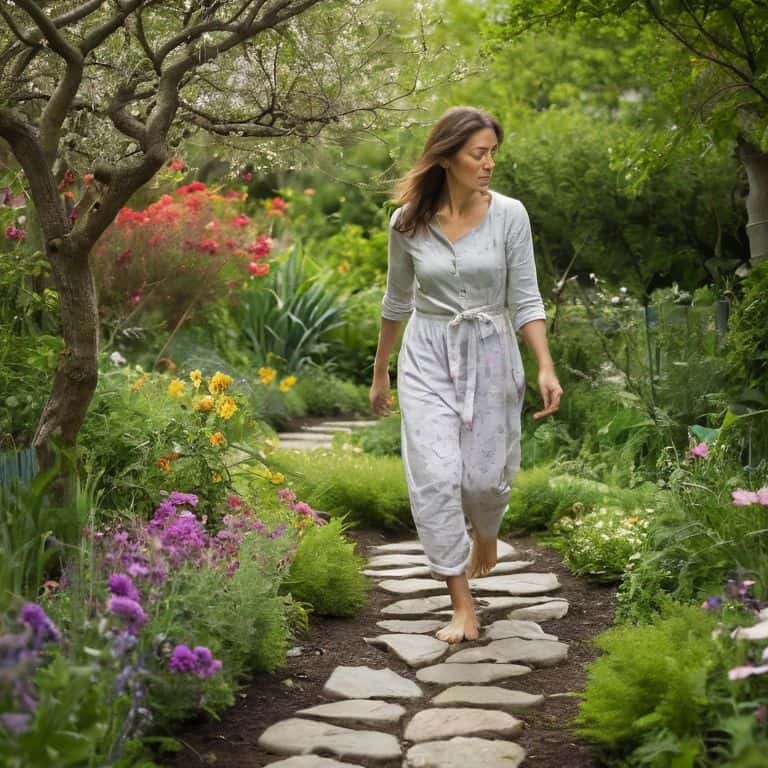
As I wander through my garden, I find that mindful walking exercises help me connect with the present moment. The sensation of my feet touching the earth, the sound of birds chirping, and the smell of fresh herbs all combine to calm my mind and soothe my soul. I encourage you to try this simple yet powerful practice, taking slow and deliberate steps as you breathe in the beauty of nature.
In addition to walking, I’ve found that body scan meditation for anxiety can be a wonderful way to release tension and promote relaxation. By lying down or sitting comfortably, and bringing awareness to each part of my body, I can let go of stress and feel more grounded. You can enhance this experience by using nature sounds for relaxation, such as the sound of waves or a gentle breeze, to create a peaceful atmosphere.
As I sit on my porch, watching the sunset, I often practice simple mindfulness practices for daily life, like focusing on my breath or the sensation of my feet on the ground. I’ve also discovered the benefits of barefoot walking, which can help you feel more connected to the earth and reduce stress. By incorporating these practices into your daily routine, you can cultivate a sense of calm and well-being, and find peace in the midst of chaos.
Breathing Deep With Nature Sounds
As I sit in my garden, surrounded by the gentle rustle of leaves and the soothing songs of birds, I’m reminded of the profound impact nature sounds can have on our well-being. The rhythmic lapping of waves against the shore, the chirping of crickets, or the soft breeze through the trees all have a way of calming the mind and inviting us to breathe deeper. I find that combining these sounds with conscious breathing exercises can be a powerful way to ground myself and find peace.
By taking a few moments to focus on the sensation of the breath moving in and out of the body, while allowing the calming sounds of nature to fill the space around me, I can feel my entire being relax and unwind. The world may be busy and chaotic, but in these quiet moments, all that fades away, and I am left with the simple, yet profound, beauty of the present moment.
Mindful Steps to Inner Calm
As I walk along the beach, feeling the sand beneath my feet and the ocean breeze in my hair, I’m reminded that inner calm is just a step away. Mindful steps, to be precise. It’s about slowing down and paying attention to the sensation of each foot touching the ground, the sound of the waves, and the smell of the salty air. In my garden, I practice a similar mindfulness, focusing on the sensation of the earth beneath my fingers as I plant seeds or tend to my herbs.
By bringing this mindfulness into our daily lives, we can cultivate a sense of calm that stays with us, even in chaotic moments. For me, it’s about savoring the simple pleasures – a warm cup of tea, a good book, or a quiet morning moment – and letting go of the need for constant productivity. As I sit at my pottery wheel, hands shaping the clay, I feel my mind quiet and my heart rate slow. It’s a reminder that peace is always available, if we only take the time to notice.
Embracing the Earth: 5 Gentle Tips for Grounding
- Let the earth beneath your feet be your foundation: take a few minutes each day to walk barefoot, feeling the texture of the ground, the sun’s warmth, or the coolness of the shade
- Indulge your senses in nature’s symphony: sit by a river, listen to the ocean’s waves, or simply pay attention to the birds singing in your backyard to calm your mind
- Get your hands dirty and find solace in gardening: nurturing plants can be a powerful way to connect with the earth and find peace in the simple act of growth
- Use your senses to anchor yourself: notice the sensation of the air on your skin, the sounds around you, or the sensation of your feet touching the ground to bring yourself back to the present
- Slow down and savor the moment with a warm cup of tea: as you sip, focus on the taste, the warmth spreading through your hands, and the tranquility that settles in your heart
Embracing Grounding Techniques: 3 Key Takeaways
As I sit here with my hands in the soil, tending to my garden, I’m reminded that grounding is about slowing down and connecting with the world around us – it’s a journey, not a destination
I’ve found that incorporating small, intentional moments into my daily routine – like taking a few deep breaths with the sound of the ocean in the background or simply noticing the sensation of my feet on the ground – can be a powerful way to cultivate calm and clarity
Whether it’s through gardening, beachcombing, or simply paying attention to the sensation of the air on my skin, I’ve learned that the simplest moments can be the most profound – and I invite you to explore these practices with me, one gentle step at a time
Embracing the Earth's Rhythm
As I knead the clay beneath my fingers, I’m reminded that grounding isn’t just a technique, but a return to the natural harmony that already exists within us – it’s about syncing our breath with the earth’s pulse, and finding calm in the cadence of the present moment.
Chloe Emerson
Embracing the Calm: A Grounding Journey

As we’ve explored the world of grounding techniques together, I hope you’ve discovered the beauty of slowing down and tuning into your senses. From the gentle rustle of leaves to the sensation of your feet on the ground, these small moments can be powerful catalysts for calm. By incorporating mindful steps, deep breathing, and nature sounds into your daily routine, you’ve taken the first steps towards a more peaceful existence. Remember, the goal isn’t to achieve a specific state, but to cultivate awareness and kindness towards yourself as you navigate life’s challenges.
As you close this chapter and embark on your own grounding journey, I invite you to hold onto the sense of serenity that arises from being fully present. May you find joy in the simple act of breathing deeply, and may your heart be filled with a sense of wonder and awe for the beauty that surrounds you. In the stillness, may you discover a deeper connection to yourself, to nature, and to the world around you – and may this sense of connection be the guiding force that illuminates your path forward.
Frequently Asked Questions
How can I incorporate grounding techniques into my daily routine without feeling like I'm taking too much time away from other responsibilities?
Let’s weave grounding into your daily rhythm, shall we? Try pairing it with existing habits, like taking a few deep breaths during your morning tea or noticing the sensation of your feet on the ground while brushing your teeth. These small moments can become powerful anchors for calm, without feeling like you’re sacrificing precious time.
What if I don't have access to nature – can I still practice grounding techniques effectively?
Don’t worry if nature isn’t at your doorstep – you can still find calm. Bring the outdoors in with potted plants, or try listening to nature sounds while focusing on your breath. Even the sensation of your feet on the ground or the feeling of a warm cup in your hands can be a powerful grounding tool.
Are there any specific grounding exercises that are particularly helpful for people who have trouble quieting their minds?
For those struggling to quiet their minds, I find that simple, tactile exercises like walking barefoot or noticing the sensation of fingers on a pottery wheel can be incredibly grounding. The gentle hum of the wheel or the feeling of earth beneath your feet can help calm a restless mind, inviting presence and peace.