I remember standing in the entryway of a client’s home last autumn, the scent of damp coats and old mail heavy in the air. As she dropped her keys into a cluttered pile of junk mail, I saw her shoulders tighten—that familiar, involuntary clench that tells me her mind is just as crowded as her floor. Most people think a hallway is just a narrow passage to get from point A to point B, but when it’s neglected, it becomes a psychological bottleneck of stress. We often overlook this transitional space, yet learning how to make a hallway work harder is actually one of the most effective ways to lower your cortisol levels the moment you step inside.
I’m not here to suggest you buy a collection of expensive, decorative baskets that will inevitably end up overflowing with clutter within a week. Instead, I want to share some practical, logic-driven systems rooted in the psychology of space. We are going to interview your belongings, assign every item a permanent home, and transform that narrow corridor into a functional bridge between the chaos of the outside world and the peace of your sanctuary. Let’s build a system that serves your life, rather than one you have to manage.
Small Hallway Storage Solutions for Mental Clarity
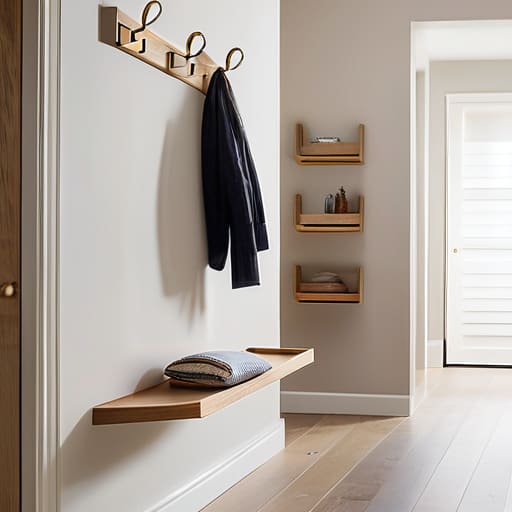
When we are working with limited square footage, the instinct is often to pull everything toward the center of the room, which only serves to choke the flow of the space. Instead, I want you to look upward. One of my favorite small hallway storage solutions involves using hallway wall space for storage to keep the floor as clear as possible. Think about slim, floating shelves or a series of elegant wall hooks. By lifting your keys, mail, and bags off the floor and onto the walls, you remove the visual “noise” that often triggers a sense of low-level anxiety when you walk through the door.
If you have a bit more breathing room, consider incorporating some narrow hallway furniture ideas that serve a dual purpose. A slim console table or a shallow shoe cabinet doesn’t just hold your essentials; it provides a designated “landing strip” for your thoughts. When every object has a specific home, your brain doesn’t have to work overtime to process the chaos. We aren’t just maximizing narrow corridor space here; we are creating a sense of intentionality that allows you to breathe easier.
Maximizing Narrow Corridor Space to Ease Anxiety
When a hallway feels like a tight squeeze, it can trigger a subtle, subconscious sense of claustrophobia. That feeling of being “hemmed in” by clutter isn’t just a physical inconvenience; it’s a mental weight. To combat this, we need to look upward. Maximizing narrow corridor space isn’t about cramming more items into the area, but rather about reclaiming the vertical plane. I often tell my clients to stop looking at the floor and start looking at the walls. By using hallway wall space for storage through slim, floating shelves or high-mounted hooks, you clear the visual path at eye level, allowing your mind to move freely through the space.
Think of your walls as a silent support system. Instead of bulky floor units that obstruct your movement, consider narrow hallway furniture ideas like a slim console table or a wall-mounted ledge. These pieces provide a dedicated “home” for keys and mail without encroaching on your walking path. When every object has a specific, elevated place, the hallway stops feeling like a bottleneck and begins to feel like a purposeful, airy transition.
Five Ways to Give Your Hallway a Clearer Sense of Purpose
- Interview your entryway items. Before you hang a hook or set a basket, ask each object: “Do you serve a daily purpose, or are you just taking up mental space?” If it doesn’t have a clear role in your transition from the world to your sanctuary, it doesn’t belong in the hallway.
- Implement the “One-Touch” rule for transit zones. A hallway works hardest when it doesn’t become a landing strip for clutter. Designate a specific, beautiful vessel for keys and mail so that when you walk in, you can set them down and immediately feel the weight of the day lift.
- Use verticality to create breathing room. When floor space is tight, look up. Installing a slim, floating shelf or a series of minimalist pegs allows you to keep essentials within reach without crowding your path, preventing that subtle sense of claustrophobia that can trigger morning anxiety.
- Curate your lighting to signal a shift in mood. A hallway shouldn’t feel like a sterile tunnel. By using warm, layered lighting—perhaps a small, soft lamp on a console—you create a gentle sensory cue that tells your nervous system it is time to slow down.
- Establish a “Launchpad” for tomorrow. To prevent the morning rush from feeling chaotic, use a small portion of your hallway to stage what you need for the next day. When your bag and shoes are ready and waiting in their designated “place,” you start your day with intention rather than frantic searching.
Creating Your Personal Sanctuary
Sometimes, the hardest part of creating a sanctuary isn’t the physical lifting, but the mental weight of feeling isolated in your struggle to find balance. We often try to solve these organizational hurdles in a vacuum, forgetting that we are social creatures who thrive on connection. If you find yourself feeling overwhelmed by the transition from your busy public life to your private home, I’ve found that simply reaching out can act as a gentle mental reset. Whether you are looking for a fresh perspective or just want to chat with people across Canada to feel a sense of community, remember that true order begins with a connected heart.
As we’ve explored, making your hallway work harder isn’t about cramming every square inch with bins and baskets; it’s about intentionality. By utilizing vertical space for storage, selecting furniture that respects the flow of your movement, and choosing pieces that serve a dual purpose, you transform a mere transit zone into a functional asset. Remember, every item you choose to place in this corridor should pass our little interview: does it have a clear purpose, and does it have a dedicated place? When you prioritize logical systems over mere accumulation, you stop fighting against your architecture and start working with it, effectively reducing the daily friction that contributes to mental fatigue.
At the end of the day, the goal of organizing your hallway is much larger than just finding a spot for your keys or shoes. It is about the psychological transition from the chaos of the outside world to the stillness of your private life. When you walk through that door and see a space that is orderly and intentional, your nervous system receives a signal that it is finally safe to unwind and exhale. I invite you to view this project not as a chore, but as an act of self-care. Build your threshold of calm one step at a time, and watch how that sense of order begins to ripple through the rest of your life.