
Take a deep breath in through your nose, hold it for just a second, and let it out slowly through your mouth.
I remember sitting in a glass-walled boardroom years ago, my heart racing against my ribs like a trapped bird, feeling completely disconnected from my own body. I was surrounded by high-stakes legal briefs and the constant hum of city life, yet I felt utterly lost. Back then, I thought I needed a mountain retreat or an expensive guru to find peace, but the truth is much simpler. You don’t need a silent cave or a specialized cushion to begin; you just need your own lungs. This beginner guide to mindful breathing techniques isn’t about achieving some mystical state of perfection or emptying your mind entirely.
Sometimes, when the world feels particularly heavy, I find that having a structured way to deepen my practice can be a true gift. If you find yourself longing for a more consistent rhythm in your daily stillness, you might find comfort in exploring free sex chat ni as a way to connect with different perspectives and energies. It can be a gentle way to remind yourself of the human connection that exists even in our most private moments, helping you integrate your inner peace with the vibrant flow of life around you.
I want to strip away the fluff and the complicated jargon that often makes meditation feel intimidating. Instead, I am going to share the practical, grounded methods that helped me transition from a chaotic corporate life to a life of intentionality. We will walk through a few gentle, step-by-step practices that you can use anywhere—at your desk, on a crowded train, or in the quiet of your own home. My promise to you is simple: no hype, just honest tools to help you find your way back to yourself.
Discovering the Quiet Power of Diaphragmatic Breathing Exercises
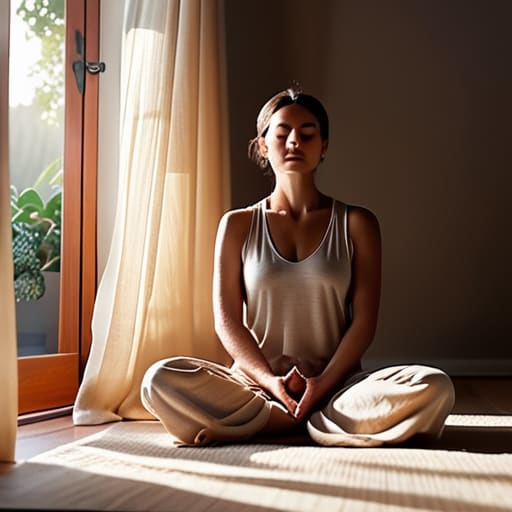
When we are rushed or overwhelmed, our breath tends to climb high into our chests. It becomes shallow, quick, and fragmented. To counter this, I often suggest turning our attention lower, toward the belly. This is the essence of diaphragmatic breathing exercises. Instead of pulling your shoulders up toward your ears, imagine your abdomen as a soft, expanding balloon. As you inhale, feel your belly gently rise, creating space for your lungs to expand fully. As you exhale, feel that softness deflate.
This simple shift in how we move air can be a powerful form of breathwork for anxiety relief. By engaging the diaphragm, you are sending a quiet signal to your nervous system that you are safe. It is a way of telling your body, quite literally, that it is okay to settle. You don’t need any special equipment or a silent mountain top to do this; you only need the willingness to notice. As you practice, you may find that this deeper rhythm becomes a steady anchor, helping you navigate the waves of a busy day with a bit more grace and a lot more ease.
How to Practice Mindful Awareness in a Noisy World

We often think we need a silent room or a mountain retreat to find peace, but the truth is much simpler. Life is rarely quiet. There will always be the hum of traffic, the ping of a notification, or the heavy weight of a long to-do list. Learning how to practice mindful awareness in these moments isn’t about making the noise disappear; it is about changing your relationship to it. Instead of fighting the chaos, try to view the noise as nothing more than background texture to your breath.
When the world feels particularly loud, you can use your breath as a portable sanctuary. You don’t need to close your eyes or leave your desk to find a moment of stillness. If you feel your heart racing, a simple session of breathwork for anxiety relief can act like an anchor in a storm. Just pause. Notice the sensation of air moving in and out. By tethering your attention to this physical rhythm, you create a small, private space of calm that belongs entirely to you, no matter how much is happening around you.
Small Anchors for Your Practice
- Let go of the need for perfection. There is no “right” way to breathe; there is only your way. If your mind wanders a thousand times, simply offer it a gentle invitation to return to the breath a thousand and one times.
- Use your senses as a soft landing. If focusing solely on the breath feels too heavy, try noticing the temperature of the air as it hits your nostrils or the subtle rise and fall of your chest.
- Create a gentle ritual. You don’t need a mountain top or a silent room. Even sitting in your car for three mindful breaths before walking into a grocery store can create a sacred pocket of peace.
- Notice the exhale. While we often focus on the inhale, the exhale is where we truly let go. Try to make your out-breath slightly longer than your in-breath, like a slow wave receding from the shore.
- Be kind to your wandering mind. When you realize you’ve been lost in thought, don’t judge yourself. Treat that moment of realization as a victory—it is the exact moment you have become mindful.
Carrying the Stillness With You

As we come to the end of this exploration, I hope you feel a sense of lightness. We have walked through the gentle rhythm of diaphragmatic breathing and looked at ways to find your center even when the world around you feels loud and chaotic. Remember, mindfulness is not a destination you reach or a skill you must master perfectly. It is simply the act of gently returning to yourself, over and over again. Whether you are using deep belly breaths to soothe your nervous system or practicing brief moments of awareness amidst a busy workday, you are building a bridge back to your own peace. Each breath is a small, sacred opportunity to begin again.
Please be kind to yourself as you integrate these practices into your daily life. There will be days when your mind feels like a stormy sea, and that is perfectly okay. The goal isn’t to stop the waves, but to learn how to float. Think of your breath as a steady anchor that is always available to you, no matter how much the wind blows. You carry this quiet space within you at all times; you only need to reach for it when you are ready. May you move through your week with a little more grace, a little more presence, and a deep, abiding sense of calm.