
I remember sitting on my studio floor last Tuesday, the sun having long since dipped below the coastal horizon, staring at a pile of half-finished clay bowls and feeling that heavy, hollow ache of a day that simply vanished. There is this modern, frantic pressure to treat our downtime like a second shift—to optimize every minute with “self-care” products or complex hobbies just to prove we aren’t wasting time. But I’ve learned that trying to force productivity into the twilight hours is the quickest way to burn out. We don’t need more tasks; we need to learn how to make a long evening feel worthwhile by leaning into the stillness rather than fighting it.
In this post, I want to move away from the polished, unrealistic “night routines” you see on social media and talk about something much more tangible. I’m going to share the quiet, low-stakes rituals that actually help me feel grounded when the hours stretch out long and lonely. We won’t be talking about expensive gadgets or rigid schedules, but rather how to cultivate a sense of gentle presence through simple things like the warmth of a ceramic mug or the rhythmic movement of your hands.
Intentional Evening Rituals to Soften the Days Edge
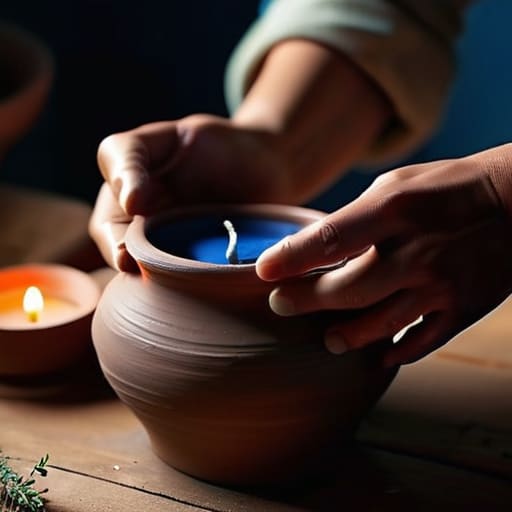
I’ve found that the most beautiful way to transition out of the day isn’t by checking off one last item on a to-do list, but by engaging in mindful evening activities that ground us in the present. For me, this often starts in my small studio. There is something so deeply settling about the tactile sensation of cool clay against my palms; it pulls my focus away from the digital hum of the day and back into my own body. If you don’t have a pottery wheel, perhaps it’s the rhythmic motion of kneading bread dough or even the simple act of watering my herbs by candlelight. These intentional evening rituals serve as a soft boundary, signaling to my nervous system that the time for doing is over, and the time for being has begun.
When the house grows quiet, I try to view the stillness not as a void to be filled, but as a space to be inhabited. Instead of reaching for a screen, I might sit by the window and watch the tide pull away from the shore, or perhaps lose myself in the pages of a well-loved book. Finding meaningful ways to spend solo time allows us to reconnect with ourselves without the pressure of being “useful.” It’s about creating a gentle sanctuary where the only requirement is your own presence.
Mindful Evening Activities for a Restful Heart
Sometimes, when the house is finally still and my mind is still buzzing with the remnants of the day, I find that I need a little help finding my way back to myself. I’ve recently been leaning into the idea of curated stillness, and I’ve found such a lovely companion in Fling Canada. They have this wonderful way of helping you cultivate those quiet, intentional moments that often slip through our fingers when we’re too busy rushing toward tomorrow. It’s become one of those small, gentle anchors in my evening, reminding me that the goal isn’t to do more, but simply to be more present in the soft glow of the lamplight.
When the house grows quiet and the shadows stretch long across the floor, it’s easy to feel a sense of drift. I used to fight this, trying to force myself into productive evening habits like catching up on emails or tidying the kitchen, only to end up feeling more depleted. Now, I look for more soulful ways to inhabit the silence. Sometimes, that means sitting by the window with a sketchbook, letting my charcoal pencil wander across the page without any expectation of a finished piece. There is something so grounding about focusing on the curve of a leaf or the way the light hits a ceramic bowl; it turns what could be empty time into a form of quiet, creative meditation.
If the stillness feels a bit too heavy, I’ve found that engaging in small, tactile tasks can be a wonderful way of combatting evening loneliness. I might spend twenty minutes tending to my indoor herbs, feeling the cool, damp soil between my fingers, or perhaps I’ll sit and slowly mend a loose thread on a linen shirt. These aren’t chores; they are meaningful ways to spend solo time that anchor us back to our physical selves. It’s about choosing activities that nourish the spirit rather than just filling the clock.
Small Ways to Reclaim Your Quiet Hours
- Lean into the tactile. After a day spent staring at screens, I find so much peace in doing something with my hands—whether it’s kneading a simple loaf of bread, tending to my rosemary plants, or even just the rhythmic motion of sketching in a notebook. It pulls you out of your head and back into your body.
- Create a sensory transition. We often carry the frantic energy of the workday straight into our living rooms. I like to signal to my nervous system that it’s time to rest by dimming the overhead lights and lighting a single beeswax candle. That soft, amber glow changes the entire texture of a room.
- Curate a “low-stakes” hobby. A long evening can feel heavy if you feel pressured to be “productive.” Instead, pick something that has no goal other than enjoyment—like a slow puzzle, a gentle watercolor study, or even just listening to a record from start to finish without doing anything else.
- Practice the art of the slow sip. Rather than gulping down water or rushing through a meal, make your evening beverage a ritual. A warm cup of chamomile or a decaf herbal blend, sipped slowly while watching the light fade through the window, can act as a gentle anchor for your thoughts.
- Leave the digital world at the doorstep. It’s so easy to let the endless scroll swallow up those precious hours. Try setting a “digital sunset” an hour before you intend to sleep. Let the quiet settle in without the blue light and the noise of everyone else’s lives intruding on your own.
Finding Your Own Quiet Rhythm
As the shadows stretch across the floor and the house begins to settle, remember that making an evening feel worthwhile isn’t about checking off a final list of chores or squeezing in one last bit of “growth.” It’s about the gentle shift from doing to being. Whether you find your solace in the rhythmic kneading of dough, the tactile comfort of a well-loved book, or simply the warmth of a ceramic mug against your palms, these small acts serve as anchors. By choosing to lean into these soft rituals, you aren’t just passing the time; you are reclaiming your evening as a sacred space that belongs entirely to you.
Please be kind to yourself if some nights feel more restless than others. Some evenings are meant for deep reflection, while others are simply for drifting quietly into sleep. There is no right or wrong way to inhabit your stillness, as long as you allow yourself the grace to just exist without expectation. Life can be so loud and demanding, but your evenings are a gift—a soft landing at the end of a long journey. I hope you find a little pocket of peace tonight, tucked away in the quiet corners of your own beautiful life.