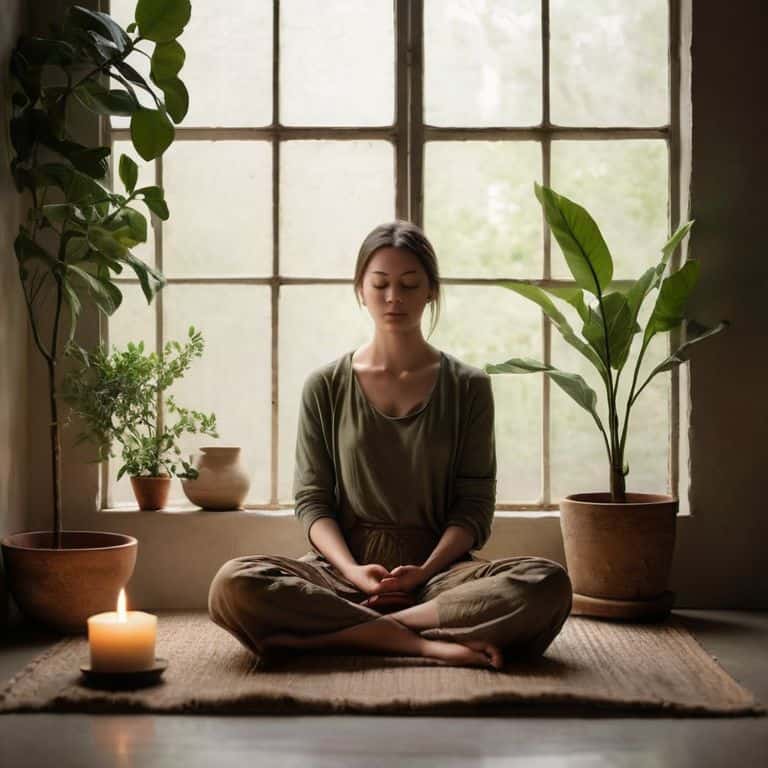
Take a deep breath in, and as you exhale, allow your eyes to gently focus on this moment. I still remember the days when I thought a guided meditation for focus and concentration was about achieving a completely blank mind – a myth that frustrated me to no end. However, my journey through mindfulness taught me that it’s not about emptying your mind, but rather about cultivating awareness of the present moment, allowing focus and concentration to become second nature.
As we embark on this journey together, I promise to share with you practical, no-nonsense advice on how to use a guided meditation for focus and concentration to quieten your mind. You’ll learn how to gently guide your attention back to the present, creating a sense of inner stillness that stays with you long after your meditation practice is over. Through simple, step-by-step instructions and guided meditations, you’ll discover how to make mindfulness a simple, accessible tool for your daily life, helping you navigate even the most chaotic of days with clarity and calmness.
Table of Contents
Guide Overview: What You'll Need

Total Time: 20 minutes
Estimated Cost: $0
Difficulty Level: Easy
Tools Required
- Comfortable seating in a quiet space
Supplies & Materials
- Guided meditation audio accessible through a phone or computer
Step-by-Step Instructions
- 1. To begin our guided meditation for focus and concentration, find a quiet and comfortable spot to sit, either on a cushion on the floor or on a chair, with your back straight and your body relaxed, allowing yourself to breathe deeply and feel the calmness of the present moment.
- 2. Close your eyes gently and take a moment to notice the sensation of your feet touching the ground, feeling the weight and connection to the earth, which helps to ground your energy and bring your attention to the present.
- 3. Bring your attention to your breath, noticing the sensation of the air moving in and out of your nostrils, the rise and fall of your chest or belly, and allow your breath to become your anchor to the present, letting go of any thoughts or distractions.
- 4. As you inhale, imagine fresh, calm energy entering your body, filling you with serenity and clarity, and as you exhale, imagine any tension, stress, or doubts leaving your body, creating space for focus and concentration.
- 5. Now, gently bring to mind the thing you want to focus on, whether it’s a task, a goal, or a personal challenge, and imagine yourself approaching it with confidence and clarity, breaking it down into smaller, manageable steps, and taking the first step with ease and determination.
- 6. As you continue to breathe deeply, visualize yourself working on your task or goal, feeling fully engaged, motivated, and completely absorbed in the process, with all your senses and abilities fully activated, and a sense of enjoyment and fulfillment arising from the experience.
- 7. When your mind wanders, and it probably will, gently acknowledge the distraction, and without judgment, gently return to your breath, and then to your task or goal, refocusing your attention with kindness, patience, and understanding, remembering that it’s a natural process and that you’re getting better at it with practice.
- 8. As you come to the end of our guided meditation, take a few more deep breaths, noticing how you feel, and when you’re ready, slowly open your eyes, taking with you the sense of calm focus and concentration, and the knowledge that you can return to this peaceful state whenever you need it, in the midst of any chaos or challenge.
A Guided Meditation for Focus

As we explore the world of mindful breathing exercises for focus, it’s essential to remember that the goal is not to achieve a specific state, but to cultivate awareness in the present moment. Gentle patience is key when developing concentration techniques, especially for adults who may be new to meditation. By committing to a regular practice, you’ll begin to notice improvements in your attention span and ability to stay focused.
To enhance your experience, try incorporating guided meditation for studying into your daily routine. This can be as simple as taking a few minutes each day to sit quietly, focus on your breath, and visualize yourself successfully completing tasks. As you practice, remember to be kind to yourself and acknowledge that it’s okay if your mind wanders – simply acknowledge the thought and gently return to your breath.
By making improving attention span through mindfulness a priority, you’ll likely find that you’re able to tackle tasks with greater ease and clarity. This, in turn, can lead to increasing productivity with daily meditation, allowing you to achieve more while feeling more grounded and centered. As you continue on this journey, remember to celebrate small victories and be patient with yourself as you grow and develop your mindfulness practice.
Increasing Productivity With Daily Calm
As we cultivate focus and concentration through mindful breathing, we begin to notice a ripple effect in our daily lives. Our tasks become more manageable, and we approach them with a sense of clarity and purpose. By incorporating a daily calm practice, we can increase our productivity and tackle challenges with ease.
Let’s take a few deep breaths and imagine ourselves moving through our day with intention and poise, handling each task with gentle attention, and finding joy in the simplicity of the present moment.
Mindful Breathing for Concentration
Let’s breathe in slowly, feeling the air fill our lungs, and exhale gently, allowing any tension to release. As we settle into this mindful breathing, imagine your focus sharpening, like a lens adjusting to bring a clear picture into view. With each inhale, repeat the phrase “I am present” to yourself, and as you exhale, whisper “I let go.”
As you continue to breathe mindfully, bring your attention to the sensation of the breath moving in and out of your body. When your mind wanders, gently acknowledge the thought and return to the breath, without judgment. Allow this rhythm to become a anchor for your concentration, guiding you deeper into a state of clarity and focus.
Cultivating Focus: 5 Gentle Reminders for a Clear Mind
- Begin by acknowledging the breath as your anchor, allowing it to gently bring you back to the present moment
- Practice mindfulness in daily activities, such as eating or walking, to cultivate a sense of awareness and focus
- Set aside dedicated time for meditation, even if just a few minutes a day, to quiet the mind and sharpen concentration
- Notice when your mind wanders during meditation, and gently guide it back to your chosen focal point, such as the breath or a mantra
- End your meditation practice with a sense of gratitude, acknowledging the stillness and clarity that has arisen, and carry this sense of calm into your daily life
Key Takeaways for Cultivating Inner Stillness
By incorporating mindful breathing into your daily routine, you can develop greater focus and concentration, leading to increased productivity and a sense of calm
Regular practice of guided meditation can help quiet the mind, allowing you to tap into your inner stillness and make more intentional decisions
Remember, the goal of mindfulness isn’t to achieve a specific state, but to gently return to the present moment, again and again, with kindness and patience, allowing you to find peace in the midst of chaos
Cultivating Inner Clarity
As we breathe in the stillness, we breathe out the distractions, and in the space between, we find the focus that has been within us all along.
Elara Keane
Embracing Inner Peace and Clarity

As we come to the end of this guided meditation for focus and concentration, let’s take a moment to reflect on the key points we’ve explored. We began by finding our anchor in the breath, using it to gently guide us back to the present moment. Through mindful breathing and silent walking meditation, we cultivated a sense of inner stillness, allowing us to concentrate and focus with greater ease. By incorporating these simple yet powerful practices into our daily routine, we can increase productivity and find a sense of calm in the midst of chaos.
As you continue on your journey, remember that the goal of meditation isn’t to achieve a specific state, but to embrace the present with kindness and curiosity. May you carry the peace and clarity you’ve discovered here with you, and may it illuminate your path, guiding you toward a brighter, more compassionate you. Take one final, deep breath in, and when you’re ready, slowly open your eyes, returning to your day with a sense of renewed purpose and inner peace.
Frequently Asked Questions
How often should I practice guided meditation to see improvement in my focus and concentration?
Let’s breathe in gently, and as we exhale, consider this: consistency is key. I recommend starting with short, daily meditation sessions, even just 5-10 minutes, and gradually increasing as you become more comfortable with the practice. Aim for at least 3-4 times a week, and observe how your focus and concentration blossom over time.
Can I use guided meditation for focus and concentration if I have a busy schedule and limited time?
Take a deep breath in, and as you exhale, allow any doubts to release. Even with a busy schedule, guided meditation can be a powerful tool for focus and concentration. Start small, just 5-10 minutes a day, and watch how it gently shifts your mind, bringing clarity and calm to your busiest moments.
Will guided meditation help me overcome distractions and stay focused on a single task for an extended period?
Let’s breathe in the possibility of calm focus together. Guided meditation can indeed help you gently return to the present, letting go of distractions and nurturing the ability to stay focused on a single task for an extended period, one mindful breath at a time.